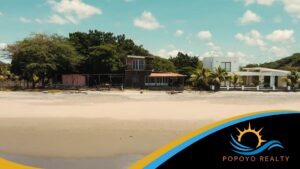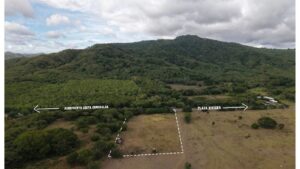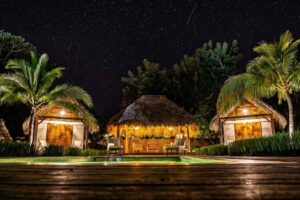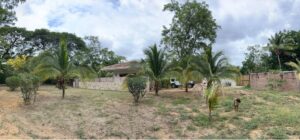
Buying land in Nicaragua in 2026 is one of the more straightforward processes in Central America for foreign buyers. The Nicaraguan Constitution, through Articles 27 and 44, guarantees the right to private property and equal treatment for all buyers regardless of nationality. Furthermore, the Foreign Investment Law, known as Law 344, reinforces this by granting international investors the same rights as nationals. No special permits are required based on nationality and no minimum investment threshold exists. What matters is where the land sits and how the government classifies it.
Nicaragua draws a growing wave of foreign buyers each year. Affordable land prices attract investors, while consistent surf and a long Pacific coastline draw lifestyle buyers. A low cost of living makes long-term residency practical. As a result, the Pacific coast has become one of the most compelling destinations in the region for foreign real estate buyers. Unlike Costa Rica or Mexico, where comparable coastline commands a significant premium, Nicaragua still offers real value for buyers who want space and ocean access without an inflated price tag.
This guide covers what to know before buying land in Nicaragua, what to expect during the purchase process, and what to watch out for along the way.
Why Foreign Buyers Choose Nicaragua
In addition to affordable prices, Nicaragua offers a legal framework that is genuinely welcoming to foreign investment. There are no foreign ownership restrictions based on nationality, no mandatory local partners, and no residency requirement to purchase. For buyers comparing options across Central America, that combination is relatively rare. Moreover, with the Coastal Highway now connecting Managua to the Pacific surf region, access to the most in-demand areas has improved significantly in recent years.
Can Foreigners Buy Land in Nicaragua?
Yes. Foreigners can legally purchase and own private residential land in Nicaragua without restriction, with two important exceptions.
Exception 1: Border Zones
Within 5 kilometers of the Honduran or Costa Rican border, direct foreign ownership is prohibited. Between 5 and 15 kilometers from either border, buying land in Nicaragua is technically possible but requires a special authorization called a waiver. That process takes one to two years.
Exception 2 Coastal Public Domain Zones
The Coastal Law protects the first 50 meters from the high-tide line as public domain, meaning no one can privately own that strip, Nicaraguan or foreign. Beyond it, up to 200 meters inland, property rights depend on specific permits and concessions tied to the location.
These rules apply equally to everyone. A Nicaraguan national faces the same restrictions as a foreign buyer, so the legal framework is consistent and predictable. Overall, buying land in Nicaragua is easier to navigate than many buyers expect.
Coastal Concessions vs. Private Title When Buying Land in Nicaragua
In coastal public domain areas, buyers access land through a municipal concession rather than a private title. A concession gives the holder the right to use the land and build on it, however it does not transfer ownership. The municipality retains that.
Some coastal properties also require a document called a Certificate of Non-Objection, known as a CONO, issued by the Attorney General’s Office. Without it, a transfer cannot be registered. Consequently, if you are looking at beachfront land, two of the first questions to ask your agent are whether the title is private or a concession, and whether the property requires a CONO.
In practice, many Pacific coast buyers sidestep this entirely by purchasing titled land set back slightly from the public zone. That land carries full ownership rights and avoids concession complexity altogether.
Titled vs. Untitled Land in Nicaragua
Whether a property carries a registered title is one of the most important distinctions when buying land in Nicaragua. Titled land sits in the Registro Publico, the national public registry, where buyers can verify ownership, transfer it, and protect it through the legal system. Untitled or possessory land, on the other hand, relies on use and occupation rather than formal registration. For a foreign buyer, that carries real risk.
Nicaragua’s land history adds complexity here. Between 1979 and 1990, the government expropriated approximately 28,000 properties. Some received compensation or regularization, however many did not. The result is that multiple people sometimes claim the same land, titles that look clean can face challenges later, and courts move slowly when disputes arise.
None of this makes Nicaragua a market to avoid. It does, however, make due diligence non-negotiable. A qualified attorney needs to trace the full title history, sometimes going back to 1979 or earlier for coastal properties.
The Step by Step Process for Buying Land in Nicaragua
A typical land purchase in Nicaragua runs 65 to 90 days from initial offer to final registration. Complex properties, especially coastal ones requiring a CONO, can take longer.
Step 1: Find the Right Property and Agent
Nicaragua has no national MLS system, so listings scatter across agencies, portals, and word of mouth. That makes your choice of agent more important here than in most markets. A good agent is not just someone who can show you properties. On the Nicaragua Pacific coast, the right agent knows which developments have clean title histories, which coastal zones require a CONO, where the boundary survey complications tend to show up, and what comparable land has actually sold for in the past year. That kind of on-the-ground knowledge is not something you find on a listing portal.
Look for an agent who is locally licensed through INVUR, has a real track record in the specific area you are targeting, and can speak to the legal nuances of what they are selling without having to look it up. If an agent cannot explain the difference between a private title and a coastal concession, or does not know whether a property sits inside a restricted border zone, that is a signal to keep looking. The Pacific coast of Nicaragua is a market where local expertise genuinely matters, and working with someone who knows it well protects you before due diligence even begins.
Additionally, hire an independent attorney separately from the start. Your agent and your attorney should be two different people with two different mandates. That separation protects your interests throughout the process.
Step 2: Make an Offer and Sign the Promesa de Venta
Once you identify a property, submit an offer with an earnest money deposit to show intent. When the seller accepts, both parties sign a preliminary agreement called a Promesa de Venta. This document sets the price, conditions, and deadlines, and typically requires a deposit of 10 percent of the purchase price held in escrow by a law firm.
Step 3: Due Diligence
Your attorney verifies the title deed, called an Escritura or titulo de propiedad, at the Registro Publico and traces the chain of title, called the Historia Registral, going back at least 10 years and often much further. In addition, the attorney obtains a Libertad de Gravamen confirming no mortgages or liens exist, and a municipal solvency certificate confirming local taxes are current. For coastal or historically public land, the attorney also checks whether a CONO applies.
Step 4: Boundary Survey
An INETER survey confirms that the physical boundaries of the land match what the title records. Skipping this step is one of the most common mistakes buyers make when buying land in Nicaragua, since boundary disputes take significant time and money to resolve.
Step 5: Closing Before a Notary
When due diligence clears, a Nicaraguan notary formalizes the sale through a document called the Escritura Publica de Compraventa. Both buyer and seller must be physically present at closing. If travel is not possible, however, the buyer can authorize a local representative through a Poder Especial, a special power of attorney signed in the buyer’s home country, apostilled, and sent to Nicaragua. Funds release from escrow at that point, and the buyer becomes the legal owner immediately, before the registry updates.
Step 6: Registration
After closing, the attorney files the complete package at the Registro Publico and cadastral services. Simple cases register in 30 to 45 days, while coastal properties requiring a CONO can take 6 to 8 months.
What Does It Cost To Buy Land in Nicaragua?
Budget 7 to 9 percent of the purchase price in closing costs, sometimes more depending on the property.
The transfer tax, called Impuesto de Traspaso, works on a progressive scale. Specifically, the rate is 1 percent up to $50,000, 2 percent from $50,001 to $100,000, and climbs to 7 percent above $500,000. Most residential transactions, however, land in the 3 to 4 percent range. Registration fees run approximately 1 percent of the property value, often capped between $1,000 and $1,500.
Attorney fees typically run 1 to 2 percent of the purchase price, while notary fees add another 0.5 to 2 percent. Survey fees run $150 to $800 depending on complexity. Escrow services cost approximately 0.5 percent of the price or $400 to $1,000. Title insurance, if you elect it, runs 0.5 to 1 percent of the insured value. As a result, on a $150,000 property, total closing costs typically land around $11,500 to $12,000.
The annual property tax, called Impuesto de Bienes Inmuebles or IBI, runs approximately 1 percent of 80 percent of the cadastral value. On a $100,000 property, therefore, expect $800 to $1,000 per year. Pay before the end of March and receive a 10 percent discount.
How Buyers Finance Land in Nicaragua
Most transactions close with cash, since local bank financing for foreign buyers exists in theory but rarely works in practice. Banks like Banpro, Banco Lafise Bancentro, and BAC can lend to non-residents, however interest rates run 9 to 15 percent and approval conditions are strict. In markets like Tola, furthermore, local banks often decline to finance real estate purchases entirely.
Buyers who want leverage typically arrange financing in their home country before arriving, for example by refinancing an existing property and presenting as a cash buyer in Nicaragua.
Seller financing fills the gap in low-inventory markets, where the seller accepts payment in installments and effectively acts as the lender. Most seller financing structures start with a 40 to 50 percent down payment, with the balance paid over 2 to 5 years. Consequently, all financing terms must be documented in the Promesa de Venta and carried into the final deed.
Cash buyers hold the strongest position overall. They move faster, carry less risk for the seller, and therefore have more room to negotiate on price.
Ownership Structures and Tax Considerations for Land in Nicaragua
Foreign buyers hold property in one of two ways. The first is direct ownership in their own name, which works well for a personal residence or a simple rental property. Alternatively, ownership through a Nicaraguan corporation, called a Sociedad Anonima or S.A., suits buyers with tax planning, estate, or capital gains considerations.
Nicaragua taxes on a territorial basis, meaning only Nicaraguan-source income is taxable in the country. Foreign income, therefore, stays entirely outside the Nicaraguan tax net.
For non-residents earning rental income from Nicaraguan property, the standard treatment is a 15 percent withholding applied to 70 percent of gross rent, resulting in an effective rate of approximately 10.5 percent of gross rental income.
On resale, capital gains tax applies to the difference between the sale price and the documented acquisition cost. Corporate owners typically pay around 15 percent, while individual owners can pay significantly more. As a result, keeping good records of your acquisition cost is essential to avoid the tax authority estimating from a default base.
The Coastal Highway and Buying Land in Nicaragua’s Pacific Region
The Coastal Highway now links the Pacific corridor from Managua down through Tola and beyond, and travel times dropped significantly when it opened. Areas that once required long overland drives now sit within two hours of the capital and its international airport. For buyers targeting land near Playa Santana, Playa Popoyo, and the surrounding surf breaks in the Tola municipality, that connectivity has changed the investment calculus considerably. Seasonal use, short-term rental, and eventual resale all become more practical when buyers and tenants can reach the property easily.
Find Your Dream Property in Nicaragua Today
Popoyo Realty works with foreign and local buyers across the Nicaragua Pacific coast. Our listings cover beachfront lots, ocean view lots, road front land, and larger investment properties across a range of price points.
Browse our current land listings to see what is available, and contact us directly with questions about a specific property or the process of buying land in Nicaragua.
FAQ: Frequently Asked Questions About Buying Land in Nicaragua
Can Foreigners Buy Land in Nicaragua?
Yes. Foreigners can legally purchase and own private residential land in Nicaragua without restriction. The Nicaraguan Constitution and Foreign Investment Law (Law 344) give international buyers the same rights as Nicaraguan nationals. The only exceptions are a prohibition on direct ownership within 5 kilometers of the Honduran or Costa Rican border, and the coastal public domain zone covering the first 50 meters from the high-tide line, which no one can privately own.
What Is the Difference Between a Coastal Concession and a Private Title?
A private title sits in the Registro Publico and gives the holder full ownership rights. A coastal concession gives you the right to use and build on the land, but the municipality retains ownership. Many Pacific coast buyers avoid the complexity of concessions by purchasing titled land set back slightly from the coastal public zone.
How Long Does It Take to Buy Land in Nicaragua?
Most purchases run 65 to 90 days from initial offer to final registration. Coastal properties requiring a Certificate of Non-Objection (CONO) can take longer. After closing, simple properties typically register within 30 to 45 days, while CONO-required properties can take 6 to 8 months.
What Are the Closing Costs When Buying Land in Nicaragua?
Budget 7 to 9 percent of the purchase price in total closing costs. This covers the transfer tax (which runs on a progressive scale), registration fees, attorney and notary fees, a boundary survey, and escrow. On a $150,000 property, expect to pay roughly $11,500 to $12,000 at closing.
Can Foreigners Finance a Land Purchase in Nicaragua?
Most transactions close in cash. Local bank financing is available in theory but difficult to obtain in practice, with interest rates of 9 to 15 percent and strict approval requirements. Many buyers arrange financing at home before purchasing. Seller financing is another option, typically requiring 40 to 50 percent down with the balance paid over 2 to 5 years.
What Taxes Apply to Land Ownership in Nicaragua?
The annual property tax runs approximately 1 percent of 80 percent of the cadastral value. It’s roughly $800 to $1,000 per year on a $100,000 property. Nicaragua taxes on a territorial basis, so only income sourced in Nicaragua is taxable locally. Non-residents earning rental income pay an effective rate of around 10.5 percent of gross rent. Capital gains tax applies on resale, typically around 15 percent for corporate owners.
What Due Diligence Is Required Before Closing?
Your attorney should verify the title at the Registro Publico, trace the full ownership history (going back to 1979 or earlier for coastal properties), confirm no liens or mortgages exist, and check municipal tax solvency. For coastal or historically public land, your attorney must also determine whether a CONO is required. A boundary survey is essential to confirm the physical land matches what the title records show.